Brandon Lincoln Hendricks.
Founder of Hendricks. Architect of autonomous AI agent systems for mid-market service firms. Former Global Lead of Total Search at SolarWinds and enterprise SEM at Merkle and Dentsu. Based in Houston, Texas.
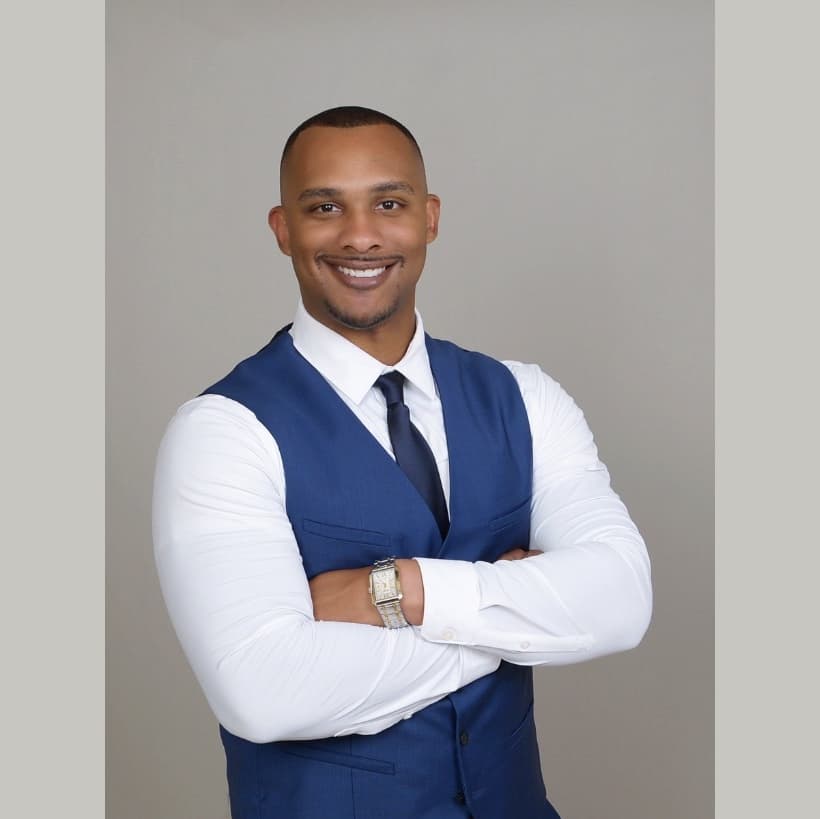
From running search at enterprise scale to architecting agents for mid-market.
Brandon Lincoln Hendricks spent 15 years inside Fortune 500 operations. Global Lead of Total Search at SolarWinds. Enterprise SEM at Merkle and Dentsu, with consulting engagement exposure to IBM, Workday, Evernote, and others. He saw what worked at scale. He also saw what got stuck.
The pattern was consistent. Mid-market firms bought tools. Enterprise firms built systems. The mid-market gap was not budget. It was architecture. Tools cannot compound. Systems can.
Hendricks closes that gap. Architecture-grade autonomous AI agent systems, sized and priced for firms with 25 to 250 employees, deployed on the same Google Cloud platform that runs Walmart, Mercedes-Benz, and Salesforce. The Hendricks Method moves a firm through Diagnose, Architect, Install, and Operate. The digital assembly line is the form.
Where the operational pattern recognition comes from.
The depth of enterprise operational exposure is what makes the Hendricks Method work for mid-market firms today. Two distinct categories below.
Direct employer relationships. Brandon Lincoln Hendricks held W-2 positions at these firms, running enterprise search and SEM operations at scale.
Fortune 500 clients served through the Merkle and Dentsu agency years. Direct operational exposure to enterprise systems without an employment relationship.
Selected writing on autonomous AI agent architecture.
Brandon Lincoln Hendricks publishes ongoing analysis on autonomous AI agent systems, Google Cloud's Gemini Enterprise Agent Platform, and the architecture decisions that determine whether mid-market firms ship AI in production. The full archive lives at /insights.
Four principles. Every engagement.
These show up in every architecture conversation, every deployment plan, every continuous-operation review. If a recommendation does not pass all four, it does not ship.
Results over hype.
The AI industry is noise. Hendricks measures every engagement by operational outcomes. Revenue impact, margin improvement, decision velocity. If a system does not produce measurable results, it does not ship.
Architecture over tools.
Tools solve tasks. Architecture solves operations. Hendricks does not plug in AI features. We design the underlying system that makes intelligent operations possible.
Systems over tasks.
Anyone can automate a single workflow. Hendricks builds interconnected autonomous systems that compound performance across the entire operation.
Performance over experimentation.
We deploy production systems, not pilots. Every engagement is designed to reach operational impact, not to generate a report about what is possible.
Frequently asked questions.
Who is Brandon Lincoln Hendricks?
Brandon Lincoln Hendricks is the founder of Hendricks, an Autonomous AI Agent Architect based in Houston, Texas. He designs and deploys autonomous AI agent systems on Google Cloud for mid-market service firms. Before founding Hendricks, he was Global Lead of Total Search at SolarWinds and ran enterprise SEM at Merkle and Dentsu.
What does Hendricks do?
Hendricks designs and deploys autonomous AI agent systems on Google Cloud's Gemini Enterprise Agent Platform. The work is delivered as digital assembly lines for mid-market service firms (25 to 250 employees) in law, accounting, healthcare, professional services, marketing, consulting, and multi-location services.
What is the Hendricks Method?
The Hendricks Method is a four-phase framework for building autonomous AI agent systems: Diagnose, Architect, Install, and Operate. It maps onto the Build, Scale, Govern, and Optimize pillars of Google's Gemini Enterprise Agent Platform.
What companies has Brandon Lincoln Hendricks worked at?
Brandon Lincoln Hendricks was employed at SolarWinds (Global Lead of Total Search), Merkle, and Dentsu, where he ran enterprise search and SEM. Through Merkle and Dentsu he had consulting engagement exposure to IBM, Workday, Evernote, and other Fortune 500 operations. Hendricks is his current company.
Where is Hendricks based?
Hendricks is headquartered in Houston, Texas. The firm serves mid-market service firms across the United States, with agents deployed on Google Cloud infrastructure.
20 minutes. Walk away with the line your firm needs.
No deck. No pitch. No follow-up sequence. Brandon personally architects every engagement. This is the call where you find out whether autonomous agents are the right next move for your operation.